


January 25 2001 - A 50-year-old Douglas DC-3 crashes near

The Douglas DC-3 was an airliner and transport aircraft. It was generally regarded as one of the most significant transport aircraft ever made due to its lasting impact on the airline industry and during the Second World War.
On the 25th of January 2001, Rutaca Flight 224 crashed near the
January 24 1888 – a German aircraft designer and manufacturer Ernst Heinkel was born.

In 1909, he attended an international airshow in Frankfurt am Main. In 1910, he built his first aircraft but unfortunately it crashed and burned. Still he did not loose confidence but rather he continue his work and then he became chief designer for the Albatros Aircraft Company located in Berlin just before the beginning of the First World War.
In Albatros, he designed the Albatros B-II. It was an unarmed reconnaissance biplane during the First World War. He left the Albatros and he designed several seaplanes for Hansa-Brandenburg Company in 1914. Later he was appointed as head designer in a re-established Caspar-Werke but left due to a dispute on ownership of a design.
In 1922, Heinkel established the Heinkel-Flugzeugwerke company. He looked for overseas contracts and so some of his seaplane designs are being licence-built in

On the 30th of January 1958, Ernst Heinkel died in
January 22 1992 – Space Shuttle program: STS-42 Mission - Dr. Roberta Bondar becomes the first Canadian woman in space.
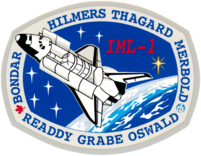
The Space Shuttle mission STS-42 was a flight of Space Shuttle Discovery lifts off an hour late of the schedule due to weather constraints on the 22nd of January 1992. The STS-42 main mission was to study the effects of microgravity on a variety of organisms. The duration of the mission was 8 days, 1 hour, 14 minutes, and 44 seconds.
The STS-42 crew includes
Blue Team
Stephen S. Oswald – Pilot
Norman E. Thagard – Mission Specialist 1
Roberta L. Bondar – Payload Specialist 1
David C. Hilmers – Mission Specialist 2
William F. Readdy – Mission Specialist 3
Ulf Merbold – Payload Specialist 2


The STS-42 was a flight of the Space Shuttle Discovery and the first of two flights of it. The Space Shuttle Discovery has an Orbiter Vehicle Designation of OV-103. It was one of the three currently operational spacecraft in the Space Shuttle fleet of NASA. It was the third operational orbiter and the oldest orbiter in the service. It performed research and International Space Station (ISS) assembly missions.

On the 22nd of January 1973, the Boeing 707 encountered an accident. The Boeing 707 operated by Royal Jordanian Airlines had been chartered by Nigeria Airways to fly pilgrims back to Jeddah to
Commercial Service of Concorde
January 21 1976 - Commercial service of Concorde begins with London-Bahrain and Paris-Rio routes.


Concorde set many other records but as a result of the type’s only crash on the 25th of July 2000, world economic effects arising from the 9/11 attacks, its operations has been ceased. And on the 26th of November 2003, its last flight occurred.
USS Nautilus (SSN-571) Launched

The USS Nautilus (SSN-571) was the first operational nuclear-powered submarine in the world. It was also the first vessel to complete a submerged transit across the North Pole.
The Congress of the
On the 21st of January 1954, it was christened and launched into the
January 18 1969 – United Airlines Flight 266 crashes into
The Flight 266 was scheduled to flight from
Approximately four minutes after takeoff, 11.5 west of LAX, it crashed into
 United Airlines Aircraft: Douglas DC-3
Other Events of January 18
World War I Aircraft: Nieuport 17 (Allied)It was opened in the
 T-38 Talon: replaced after the infamous incident Diamond Crash that killed four members of the team’s six demonstration pilots.
 1982 - U.S. Air Force Thunderbirds: "Diamond Crash" kills four team members.

Martin 4-0-4: Eastern had the largest fleet with 60 type in operation
Events of January 17: B-52 Collides with KC-135; Gulf War Operation Desert Storm Begins
0 comments Posted by admin at 11:20 PM
January 17 1966 – A B-52 bomber collides with a KC-135 Stratotanker over  The B-52G Bomber of the US Air Force Strategic Air Command runs into a KC-135 Stratotanker during mid-air refueling over the Mediterranean Sea, off the coast of
 The KC-135 Stratotanker was completely destroyed that caused the loss of all four crew members while the B-52G Stratofortress was broke apart that result to the loss of three out of seven crew members.
 Gulf War:
“The great duel, the mother of all battles has begun. The dawn of victory nears as this great showdown begins.”- Saddam Hussein

January 17 1991 – Gulf War: Operation Desert Storm begins early in the morning. 
The massive air campaign codenamed Operation Desert Storm was launched by the coalition the day after the deadline set in Resolution. It began when eight (8)