Blogger Template by Blogcrowds

January 29 1944 – USS Missouri the last battleship commissioned by the US Navy is launched.

USS Missouri Battleship

The USS Missouri (BB-63) was also known as the Mighty Mo or Big Mo. It was a US Navy battleship and the third ship of the US Navy to be named in honor of the US state of Missouri.

The USS Missouri was the last battleship built by the United States. It was ordered on the 12th of June 1940 and laid down on the 6th of January 1941. On the 29th of January 1944, the Missouri was launched at New York Naval Shipyard in Brooklyn, New York and commissioned on the 11th of June. It was the third of the Iowa class but the fourth and final battleship commissioned by the US.

The USS Missouri (BB-63) has the length of 887 feet and 2 inches; beam of 108 feet and 2 inches; draft of 28 feet and 9 inches; and displacement of 45,000 tons. It was armed with (1943) nine 16-inch/50 caliber Mark 7 guns; twenty 5-inch/38 caliber Mark 12 guns; eighty 40mm/70 caliber anti-aircraft guns; and forty-nine 20mm/70 calibers anti aircraft guns.

USS Missiouri: US Navy

The USS Missouri was best known as the site where General Douglas MacArthur officially accepted the surrender of Japan which ends the Second World War on the 2nd of September 1945.

The USS Missouri was decommissioned on the 31st of March 1992 at Long Beach, California. It remained part of the reserve fleet until January 12, 1995 when it was struck from the Naval Vessel Register. On the 4th of May 1998 a donation contract was signed and the historic battleship was said to be transferred to the nonprofit USS Missouri Memorial Association (MMA). And on the 23rd of May she was towed from Bremerton to the Port of Astoria, Oregon for cleaning and then towed across the eastern Pacific and docked at Ford Island, Pearl Harbor on the 22nd of June. And on the 29th of January 199, she was opened as a museum operated by the MMA.

Francis Stanley “Gabby” Gabreski: Top American Fighter Ace

January 28 1919 – Francis Gabreski, American fighter pilot.

Francis Stanley “Gabby” Gabreski

Francis Stanley “Gabby” Gabreski was born today, 28th of January 1919. He was the top American fighter ace in Europe during the Second World War, a jet fighter ace in Korea, and a career officer in the US Air Force with more than 26 years in the service.

Curtiss P-40 AVG Flying Tiger

Aside from being one of only seven US pilots that became an ace in two wars, he was also one of the most accomplished leaders in the Air Force. During the Second World War, he was assigned as a pilot with the 45th Fighter Squadron of the 15th Fighter Group. He was trained on both P-36 and Curtiss P-40.

Spitfire Mk IX

During his Royal Air Force (RAF) duty, he flew the new Spitfire Mark IX. And Gabreski learned during his duty with RAF that he had to keep calm during a mission. In his career with US Air Force, he became the commander of his former unit, the 56th Fighter Group and he flew F-80 Shooting Stars.

Gabreski died on the 31st of January 2002 of an apparent heart attack. He is buried in Calverton National Cemetery along with his wife Kay.

Leonid Kostyantynovych Kadenyuk: The First Astronaut of Ukraine

January 28 1951 – Leonid Kadenyuk, Ukrainian cosmonaut.

Leonid Kostyantynovych Kadenyuk

Leonid Kostyantynovych Kadenyuk was the first and only astronaut of independent Ukraine as of 2005. He holds the rank of Ukrainian Air Force Major General. He has been a career Soviet military pilot and cosmonaut since 1976. He started his service with the Soviet Air Force and later with the Cosmonaut Group. He remained in the Russian Space Forces and adopted Russian citizenship due to the break-up of the Soviet Union.

STS-87Mission

In 1995, he returned to his homeland and volunteered to take part of the first Ukrainian space mission. In 1997, he made his flight on NASA’s Space Shuttle Columbia as part of the international mission STS-87. The mission duration was 15 days, 16 hours, 35 minutes, and 01 seconds.

January 28 1946 - Bluenose, Canada's greatest sailing ship, founders on a Haitian reef.

The Bluenose was a Canadian schooner from Nova Scotia. It was launched on the 26th of March 1921. It was a celebrated racing ship and a symbol of the province. It was financed by Captain Angus Walters and four Halifax businessmen.

The Bluenose soon proved that she is an excellent sailing vessel as she cleverly won the 1921 Canadian trials over seven other competing schooners. Another two races were held in late October and both were won by the Bluenose and she brings the International Fishermen’s Trophy back home.

Bluenose

Later on as a lot of powered fishing vessels are built sailing schooners were over powered and so the Bluenose was eventually sold for coastal trading in Caribbean waters. On the night of January 28, 1946, the Bluenose collided with a reef off the coast of Haiti. It was wrecked beyond repair, but fortunately all hands were saved and it ended a glorious era of sailing history.

Avianca Flight 52: Boeing 707-321B

January 25 1990 – Avianca Flight 52 crashes, killing 73 passengers.

The Avianca Flight 52 was a regularly scheduled flight from Bogotá to New York’s John F Kennedy International Airport.

Boeing 707-320: Pan Am

On the 25th of January 1990, the aircraft performing the Avianca Flight 52 was a Boeing 707-321B and it was registered as HK-2016, crashed in Cove Neck in New York. The cause of the crashed was fuel starvation and pilot error. This results to the killings of 73 passengers and crew on board, and injured 85 others.

Douglas DC-3 Crashed

January 25 2001 - A 50-year-old Douglas DC-3 crashes near Ciudad Bolivar, Venezuela killing 24.

Douglas DC-3: United Airlines

The Douglas DC-3 was an airliner and transport aircraft. It was generally regarded as one of the most significant transport aircraft ever made due to its lasting impact on the airline industry and during the Second World War.

On the 25th of January 2001, Rutaca Flight 224 crashed near the Ciudad Bolivar, Venezuela. The aircraft performing this flight was the Douglas DC-3 and it has 24 people on board and that includes the 20 European tourists. There was no survivors on the said crashed. And the identities and nationalities of the passengers weren’t immediately known together with the cause of the crash.

January 24 1888 – a German aircraft designer and manufacturer Ernst Heinkel was born.

Ernst Heinkel

Ernst Heinkel was born in Grunbach, Germany on the 24th of January 1988. He started as an apprentice machinist at a foundry. He became interested with aviation through his fascination with zeppelins, a type of rigid airships.

In 1909, he attended an international airshow in Frankfurt am Main. In 1910, he built his first aircraft but unfortunately it crashed and burned. Still he did not loose confidence but rather he continue his work and then he became chief designer for the Albatros Aircraft Company located in Berlin just before the beginning of the First World War.

In Albatros, he designed the Albatros B-II. It was an unarmed reconnaissance biplane during the First World War. He left the Albatros and he designed several seaplanes for Hansa-Brandenburg Company in 1914. Later he was appointed as head designer in a re-established Caspar-Werke but left due to a dispute on ownership of a design.

In 1922, Heinkel established the Heinkel-Flugzeugwerke company. He looked for overseas contracts and so some of his seaplane designs are being licence-built in Sweden.

Heinkel He 111

Adolf Hitler came to power and the designs of Heinkel’s firm formed a vital part of the Luftwaffe’s growing strength that leads up to the Second World War. The design includes Heinkel He 59, a trainer, transport, ambulance, torpedo bomber type of aircraft; Heinkel He 115, a three seats torpedo bomber aircraft; and the Heinkel He 111, medium bomber and perhaps the most famous symbol of the German side of the Battle of Britain.

On the 30th of January 1958, Ernst Heinkel died in Stuttgart, Germany.

January 22 1992 – Space Shuttle program: STS-42 Mission - Dr. Roberta Bondar becomes the first Canadian woman in space.
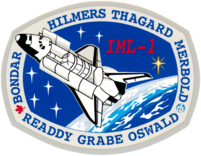
Mission STS-42 Insignia

The Space Shuttle mission STS-42 was a flight of Space Shuttle Discovery lifts off an hour late of the schedule due to weather constraints on the 22nd of January 1992. The STS-42 main mission was to study the effects of microgravity on a variety of organisms. The duration of the mission was 8 days, 1 hour, 14 minutes, and 44 seconds.

The STS-42 crew includes West Germany’s first astronaut, Ulf Merbold; and Canada’s first woman astronaut, Roberta Bondar. The mission of the STS-42 required the around-the-clock monitoring experiments and so they are divided into a red and a blue team.

Blue Team

Ronald J. Grabe – Commander

Stephen S. Oswald – Pilot

Norman E. Thagard – Mission Specialist 1

Roberta L. Bondar – Payload Specialist 1

Red Team

David C. Hilmers – Mission Specialist 2

William F. Readdy – Mission Specialist 3

Ulf Merbold – Payload Specialist 2

The STS-42 was a flight of the Space Shuttle Discovery and the first of two flights of it. The Space Shuttle Discovery has an Orbiter Vehicle Designation of OV-103. It was one of the three currently operational spacecraft in the Space Shuttle fleet of NASA. It was the third operational orbiter and the oldest orbiter in the service. It performed research and International Space Station (ISS) assembly missions.

January 22 1973 - A chartered Boeing 707 exploded in flames upon landing at Kano Airport, Nigeria killing 176.

The Boeing 707 was a four-engine commercial passenger jet airliner. It dominated passenger air transport in 1960s. It was based on an aircraft known as 367-80. It was called the Dash 80 within Boeing.

On the 22nd of January 1973, the Boeing 707 encountered an accident. The Boeing 707 operated by Royal Jordanian Airlines had been chartered by Nigeria Airways to fly pilgrims back to Jeddah to Lagos. Due to bad weather at Lagos, the crew was forced to divert to Kano Airport, Nigeria. Unfortunately, the right main gear leg collapsed after touchdown as it hit a depression in the runway. It turned 180 degrees and skidded off the side of the runway, caught fire, and exploded. This accident result to the killing of 176 people onboard.

Newer Posts Older Posts Home