


STS-122 was launched on the 7th of February 2008. It is the current NASA Space Shuttle mission to the International Space Station or ISS. The STS-122 is being flown by Space Shuttle Atlantis.

The STS-122 primary objective is to deliver the
The mission STS-122 original target launch date was on the 6th of December 2007 but postponed to the 9th of December due to ECO reading errors but on the second attempt sensors failed again and the launch was stopped. Fortunately on its third attempt no problem occurred.
STS-122
- Stephen Frick – Commander
- Alan G. Poindexter – Pilot
- Leland D. Melvin – Mission Specialist 1
- Rex J. Walheim – Mission Specialist 2
- Hans Schlegel – Mission Specialist 3
- 152nd manned
- 121st space shuttle flight since STS-1
- 24th shuttle mission to the International Space Station
- 96th post-Challenger mission
- 8th post-Columbia mission
- 8th visit to the International Space Station for Atlantis
- 300th

Space Shuttle Discovery out on another Mission (Designation STS-82)
0 comments Posted by admin at 10:01 PMFebruary 11, 1997 – Space Shuttle Discovery is launched on a mission to service the Hubble Space Telescope.
STS-82
The STS-82 was a mission of the US Space Shuttle. It was the second in a series of planned servicing mission to the orbiting Hubble Space Telescope (HST). The mission used the Space Shuttle Discovery. And the mission had duration of 9 days, 23 hours, 38 minutes, and 09 seconds.

Space Shuttle Discovery has an Orbiter Vehicle Designation of OV-123. It was one of the three currently operational spacecraft of NASA. It was the third operational orbiter and now the oldest orbiter in the service. It was used on a lot of missions, one of which was the STS-31 on the 24th of April 1990. It launched the Hubble Space Telescope (HST). The duration of the mission was 5 days, 01 hours, 16 minutes, and 06 seconds.
The Hubble Space Telescope was a telescope in orbit around the world. It was named after Edwin Hubble, a known American astronomer. It became one of the most important instruments in the history of astronomy.

The HST was placed on orbit by the Space Shuttle Discovery on the 24th of April 1990 through STS-31 mission. The Space Shuttle Endeavour was the use in the first servicing mission known as the STS-61. The services performed on the telescope significantly helped upgrade the scientific capabilities of the Hubble Space Telescope (HST).

The STS-82 crews are:
Kenneth D. Bowersox - Commander
Scott J. Horowitz - Pilot
Mark C. Lee - Mission Specialist
Steven A. Hawley - Mission Specialist
Gregory J. Harbaugh - Mission Specialist
Steven L. Smith - Mission Specialist
Joseph R. Tanner - Mission Specialist
January 22 1992 – Space Shuttle program: STS-42 Mission - Dr. Roberta Bondar becomes the first Canadian woman in space.
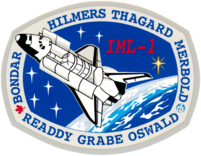
The Space Shuttle mission STS-42 was a flight of Space Shuttle Discovery lifts off an hour late of the schedule due to weather constraints on the 22nd of January 1992. The STS-42 main mission was to study the effects of microgravity on a variety of organisms. The duration of the mission was 8 days, 1 hour, 14 minutes, and 44 seconds.
The STS-42 crew includes
Blue Team
Stephen S. Oswald – Pilot
Norman E. Thagard – Mission Specialist 1
Roberta L. Bondar – Payload Specialist 1
David C. Hilmers – Mission Specialist 2
William F. Readdy – Mission Specialist 3
Ulf Merbold – Payload Specialist 2


The STS-42 was a flight of the Space Shuttle Discovery and the first of two flights of it. The Space Shuttle Discovery has an Orbiter Vehicle Designation of OV-103. It was one of the three currently operational spacecraft in the Space Shuttle fleet of NASA. It was the third operational orbiter and the oldest orbiter in the service. It performed research and International Space Station (ISS) assembly missions.

Space Shuttle

The Final mission for the Space Shuttle Columbia carried a crew of seven astronauts:
William C. McCool: Pilot
David M. Brown:
Kalpana Chawla: Flight Engineer
Michael P. Anderson: Payload Commander
Laurel B. Clark:
Ilan Ramon: Payload Specialist
The STS-107 was a multi-disciplinary microgravity and Earth science research mission with a multitude of international scientific investigations conducted continuously during 16 days in orbit.
On the 1st of February 2003, morning, the shuttle re-entered the atmosphere after a 16 day orbit (scientific mission). Unfortunately, Space Shuttle Columbia disaster occurred that resulted with the loss of all seven crew minutes before concluding its 28th mission.
According to investigations, the loss of the Columbia was caused by a piece of foam known as the Left Bipod Foam Ramp that broke off during launch and damaged the thermal protection system components on the left wing of the Shuttle orbiter and caused extensive heat build up.
Apollo 8 Splashes down in the Pacific Ocean, Ending Humanity’s First Manned Mission to the Moon
0 comments Posted by admin at 4:17 PM
Apollo 8 Splashes down in the Pacific Ocean, Ending Humanity’s First Manned Mission to the Moon
The Apollo program is definitely considered one of the most famous American history of the world. The program represents the very first time a human being sets foot on an extraterrestrial mass of land.
Apollo 8 was the first among the Apollo series which have successfully orbit the moon, and the first manned spacecraft to leave Earth’s gravity and reach the moon. On December 27, 1968, a tragic event happened. Apollo 8 splashed down in the
It was really fortunate that the spacecraft achieved operational experience and testing of the Apollo command module systems such as communications, tracking and life-support. Otherwise, history might just repeat itself. Remember the Apollo 1 tragedy that happened in January 27, 1967? It was considered one of the worst tragedies in spaceflight history wherein the spacecraft’s crews, Edward White, Roger Chaffee and Virgil Grissom were killed in the process in a fire inside the Apollo Command Module during a preflight test at
Since then, changes had been made to the Apollo Command Module as a result of the tragedy and which in turn, resulted in many highly reliable spacecrafts including the Apollo 8.
About the Author:
Jules Elgincolin, is a copy writer of Warplanes.com